
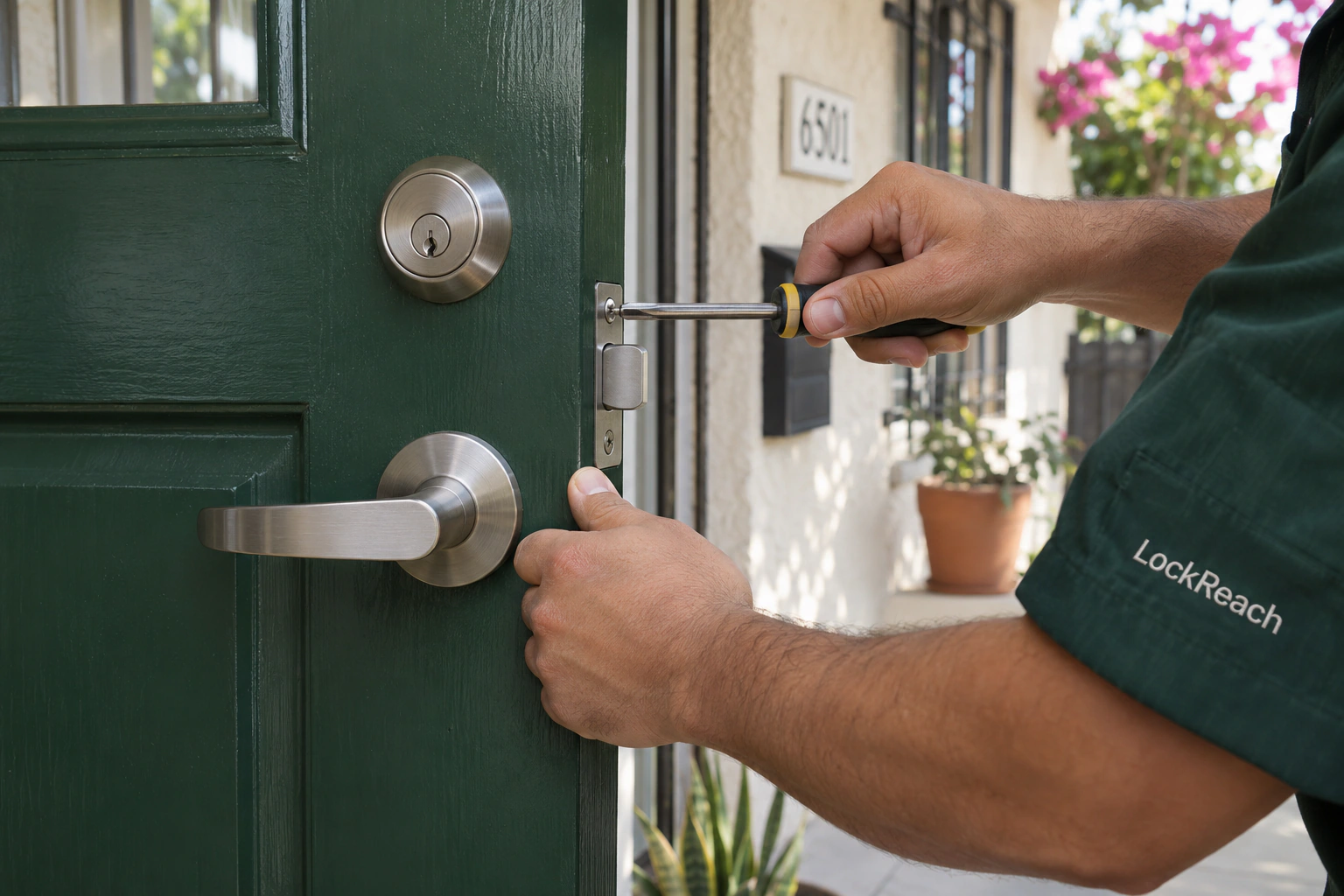
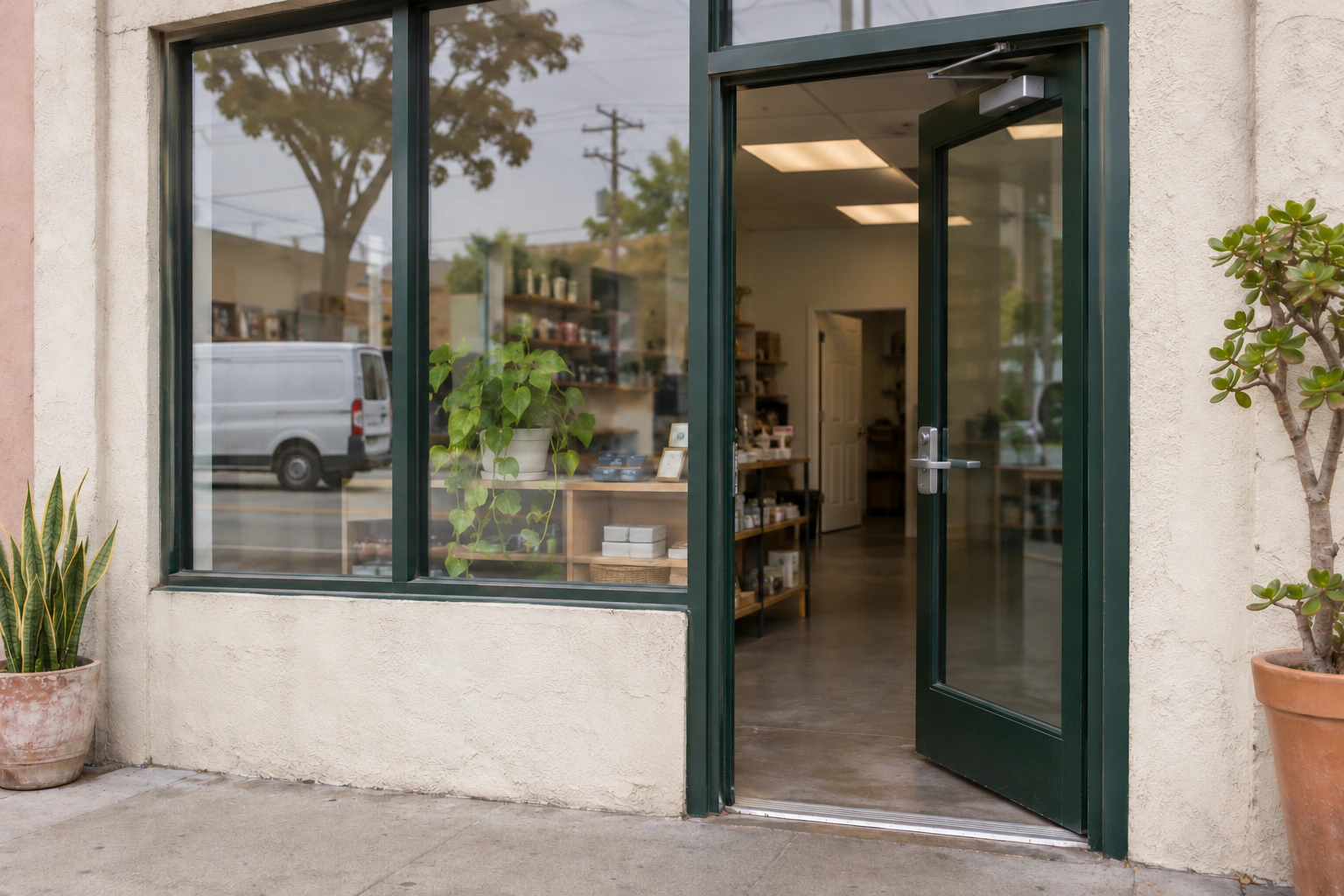
A business door needs to admit the right people, close properly and work with the way the premises are used. When one of those functions changes, the repair should begin with the entrance itself. Call LockReach at 323-271-4264 to discuss commercial locksmith service in Bell. Tell us whether you are dealing with a lockout, a difficult lock, a staffing change or an entrance that will not secure at closing time.
Describe the door's job before choosing the hardware
A customer entrance is used differently from a staff door or a locked office inside a larger building. Start with who uses the entrance, how frequently it opens and when it should remain secured. Explain whether people need to enter from outside, leave from inside or pass between separate parts of the premises.
A lock that works correctly in isolation may still be unsuitable for the way a business uses the door. An employee may need to keep pulling the door into place before the key turns, or the latch may fail to engage after the last customer leaves. Those details make the request more precise than simply asking for a stronger lock.
Let us know about the rest of the entrance. A door closer, an access device or a shared building arrangement may affect the work being considered. The proposed service needs to account for those connections without assuming that every attached component is part of the same fault.
Plan around the actual entrance in Bell
Atlantic Avenue and Gage Avenue are important commercial reference points in Bell. For a business in that area, the storefront name can be a helpful landmark, but it may not identify the service entrance. Say whether the affected door faces the main street, a side passage or a parking area.
A building can contain more than one business, with different people responsible for the common entrance and the individual units. Include the suite or unit designation and the name of the person who will meet the technician. Arrange permission to enter any shared or controlled area before the visit.
Think about deliveries and customer movement when discussing an appointment. Explain whether the door must remain usable while the problem is assessed, and whether another authorized entrance is available. These practical constraints help define the request; they do not establish a fixed arrival time or promise that every repair can be completed without interruption.
When staff or tenants change
A departing employee or a change of tenant can leave uncertainty about who retains access. Begin with an inventory of the entrances affected. The front door, staff entrance and interior office may have separate locks, and only some of them may need a change. A clear list prevents unnecessary work on unrelated areas.
Rekeying may be an option for suitable existing hardware when the goal is to change the operating key. It does not repair a damaged lock or automatically change the permissions of a separate electronic system. If both are involved, describe both so the request does not overlook another way into the premises.
Decide who will approve the new arrangement and who needs access afterward. A manager handling the phone call may not be the person authorized to change a landlord-controlled entrance. Bring the relevant contact into the conversation before work begins, especially where several businesses share the same exterior door.
Separate a lock problem from a closing problem
If the key turns with the door open but resists when it is closed, mention that observation. If the handle returns slowly, the door rubs or the latch misses its receiving point, describe those symptoms as well. You do not have to identify the cause to give a useful account of what is happening.
An entrance that needs repeated slamming can disrupt a business even when it eventually locks. The appropriate assessment looks at how the door closes, where the locking parts meet and whether the hardware is functioning as intended. Changing one component without understanding that relationship can leave the original inconvenience unresolved.
Do not adjust several things at once while trying to prepare for a service visit. Preserve a clear account of the fault, including when it occurs and whether it changes during the day. If the problem is intermittent, a description of the last incident can be more helpful than repeatedly forcing the mechanism until it behaves differently.
Access changes need a clear scope
List the specific doors to be worked on and identify any equipment that should remain untouched. A request to change access to an office does not automatically include an exterior entrance or a neighboring suite. Good preparation makes the proposal easier to compare with the business's actual needs.
For a larger request, distinguish essential work from optional improvements. Restoring a door that will not secure may be the immediate priority, while changing other hardware can be considered separately. Ask how labor, inspection and proposed parts will be described, and what would require an additional approval.
If the door is part of an exit route or connects to building safety equipment, explain that before a hardware change is discussed. The work should preserve the intended use of the entrance. Specialized building systems may need coordination with the owner or another appropriate service provider rather than an improvised change at the door.
Prepare for a useful handover
Choose someone who understands the normal opening and closing routine to be present at the end of the work. A door can appear satisfactory during a brief inspection while a practical question remains about how staff should use it. Walk through the expected operation and discuss anything that still feels unclear.
Keep a record of which locks were serviced and the work that was authorized. If access settings or operating instructions have changed, make sure the responsible staff receive the information. Avoid leaving the new procedure known only to a person who was temporarily covering the premises that day.
LockReach's commercial locksmith conversations focus on the entrance causing the difficulty and the people responsible for it. Call 323-271-4264 with the Bell business address, door description and contact details. If you manage another nearby property, the service-area directory can help you find the relevant location page before checking availability for that address.
Questions about the next step
Can a business be rekeyed without replacing all its locks?
Suitable locks may be rekeyed, but their condition, compatibility and role in the building need assessment. A shared entrance or an existing managed access arrangement may involve additional approval. Start with the doors that need a change rather than assuming that every lock in the premises must be replaced.
What should I do if the shop door will not lock at closing?
Explain that the premises cannot be secured and describe whether the door closes normally. Give the address, the affected entrance and the authorized contact. Ask about current service availability and the proposed assessment. Do not assume the problem is solved just because the key can turn.
Can I arrange work on behalf of a property owner?
Discuss the authorization and contact arrangements before scheduling. The owner or manager may need to approve the scope or provide access to a shared area. Having that information ready helps avoid an incomplete visit caused by uncertainty about who can authorize changes.
Local and practical reference: cityofbell.gov.