
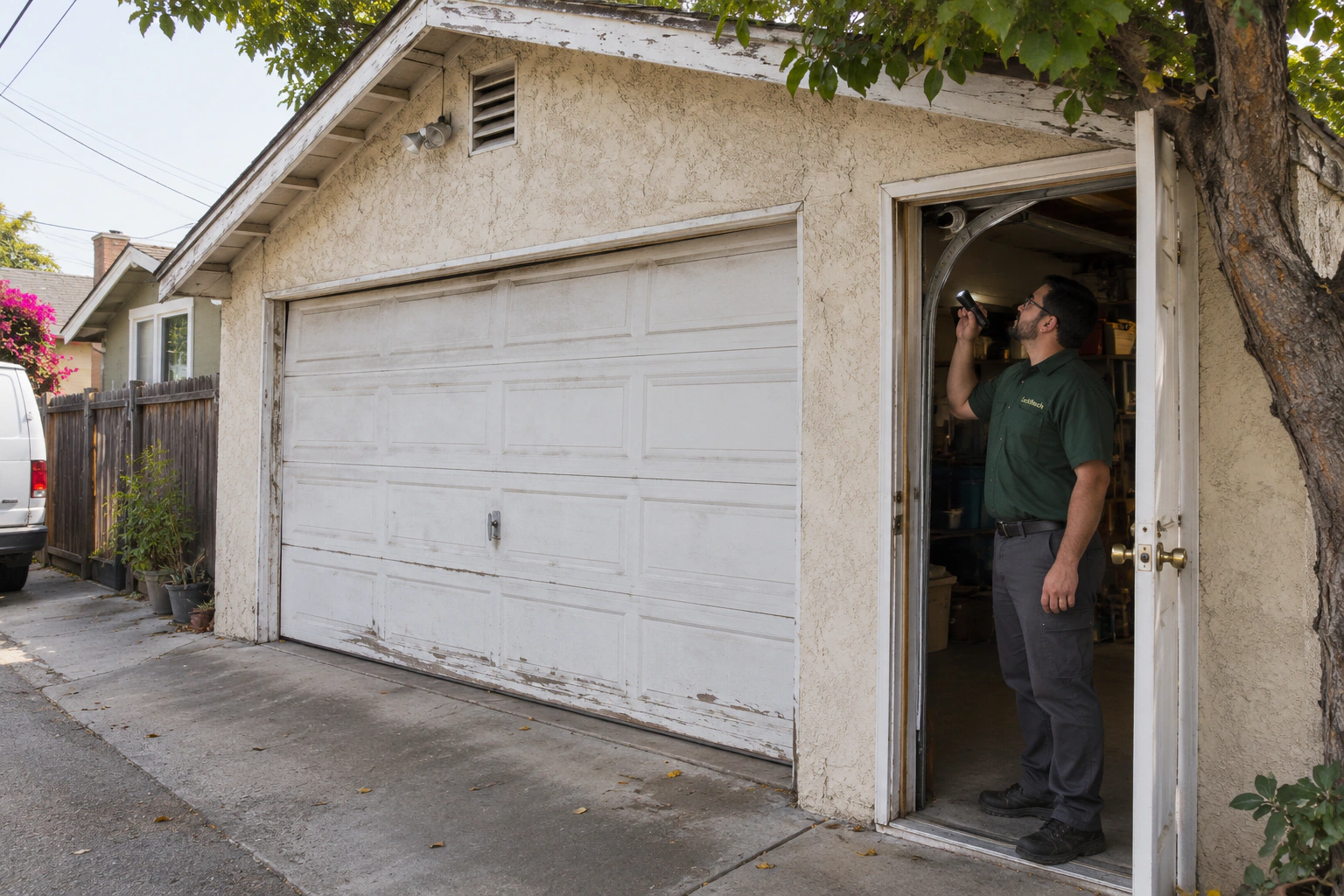
A garage door that stops halfway, sits unevenly or refuses to close needs an assessment of the existing system. Call LockReach at 323-271-4264 to discuss garage door repair in Bell. Describe where the door has stopped, whether it is level and what happens when you use the controls. The request can then be directed toward the door, its lifting hardware or the opener instead of assuming that an entire system needs changing.
Begin with the symptom, not a shopping list
You do not have to diagnose a garage door before calling for help. Tell us whether it will not open, will not close, reverses during travel or makes an unfamiliar noise. Mention when the problem began and whether anything happened immediately beforehand, such as an impact or a visible part becoming loose.
Separate what you saw from what you suspect. Hearing a loud noise and then finding the door difficult to operate is useful information; deciding which spring to order is a different task. A repair assessment needs to consider the door and the parts fitted to it before a replacement component is selected.
This service is for existing garage doors and their operating parts. The focus is on repair questions involving springs, cables, rollers, tracks, sensors and openers. If inspection reveals a wider structural problem or a condition outside that scope, the limits should be explained rather than hidden inside a general repair promise.
An uneven or damaged door needs a mechanical assessment
A door that appears crooked or has moved out of its normal track should not be repeatedly operated. Keep people away from its path and arrange an assessment. A visible cable problem, a damaged track or a displaced roller is a reason to stop testing the door, not a prompt to pull it back into position.
Springs and connected components can remain under substantial tension. Do not loosen their brackets, try to reset a cable or attempt to support an unstable door with improvised objects. Tell us what is visible from a safe position. You do not need to climb beside the mechanism or move the door to provide a useful description.
The repair discussion should explain both the failed component and the condition of related parts. A cable that has moved out of place may not be the only thing that needs attention. Ask what the assessment found and how the proposed work addresses the cause of the uneven movement.
When it opens but will not close
A door that opens from the remote but will not close can involve the safety-sensor system, the controls or another operating fault. Note whether the door starts down and reverses, stays still or shows a repeated light pattern. Record the opener brand and model if the label is already accessible without climbing.
Chamberlain's diagnostic guidance identifies sensor problems among the causes of this behavior, while also noting that light patterns vary by model. A symptom alone does not prove that a sensor needs replacing. If you have already found that the door closes only while a wall button is held, report that observation rather than treating it as a permanent workaround.
You can notice a visible object in the doorway without adjusting any equipment. Do not bypass a safety device or change force settings to make the door close. Our guide to a garage door that will not close helps organize the observations to pass on during a service call.
Opener trouble does not always mean a new opener
The opener is the powered unit that moves the door, but it depends on a door that can travel correctly. A motor sound without normal movement, an unreliable remote and a door that binds can involve different causes. Describe what each control does and whether the same problem occurs every time.
If only one remote is affected, say so. If neither the remote nor the wall control responds, that is a different starting point. Keep any model information and existing instructions available, and mention recent work or changes to the controls. Avoid repeatedly resetting devices before the fault has been understood.
Ask whether the proposed work concerns a control, a compatible component or the condition of the opener itself. Replacing a part and replacing the powered unit are different decisions. The explanation should connect the recommendation to the observed fault, the equipment fitted and any limitation in finding suitable parts.
Arrange access to the right garage
At a Bell rental property, the person using a garage may not be the person responsible for approving its repair. Contact the owner or manager and identify who can authorize the proposed work. If more than one household uses the property, be clear about which door belongs to which unit.
A street address may lead to the front of a home while the garage is reached from another side. Explain the driveway entrance, any gate and whether a separate access door is available. Arrange entry with the appropriate person; do not try to force the garage open simply to make the visit easier.
Tell us if a vehicle is trapped inside or if the open door affects the security of stored belongings. Those details help explain the impact of the problem, but they do not establish that the door can be moved before inspection. Keep a clear route to the garage where it is safe to do so.
For an address beyond Bell, use the separate garage service-area listings and call to discuss the location. Availability depends on the request and the address. Research distances or a nearby city name should not be treated as a promised travel time.
Make the repair proposal easy to understand
An estimate should identify the work being proposed, any parts involved and the charges that apply to the visit. A spring repair, a damaged cable and an opener diagnosis are not interchangeable jobs. A price from an unrelated online discussion may reflect different equipment, damage or service conditions.
Ask what has been checked and whether the quoted work addresses everything found during that assessment. If another problem is discovered, discuss the additional recommendation before approving it. You should be able to distinguish the immediate repair from optional work or a separate concern that needs another type of contractor.
When the work is complete, have the agreed operation explained and note any remaining limitation. Keep the service description and relevant part information with your household records. If more than one person uses the garage, make sure they know about any change in its controls or operating routine.
To arrange the next conversation, call 323-271-4264 with the Bell address, the door's current position and the problem you have observed. LockReach can discuss the existing-door repair request without asking you to identify a failed part or undertake a risky test first.
Questions about the next step
Can I keep using the opener if a spring appears broken?
Stop operating the door and have the condition assessed. Do not try to compensate by increasing opener force, lifting the door yourself or adjusting spring hardware. Explain the visible problem and whether a vehicle is inside when you call.
Do I need to replace the whole door because a cable is damaged?
A damaged component does not, by itself, establish what the whole door needs. The condition of the existing door and related hardware should be assessed. Ask for the repair options and their limits to be explained before agreeing to the work.
Can you give a repair price from a photograph?
A photograph may help describe the visible condition, but it may not show the cause or all affected parts. Ask what can be estimated from the available information and what requires inspection. Any change to the proposed scope should be discussed before approval.
Should I buy a replacement opener before the visit?
It is better to confirm the cause and equipment requirements first. A control or door problem can be mistaken for an opener failure. The existing model, the door and the intended function need to be considered before choosing another unit.
Local and practical reference: census.gov.