
If your garage door will not close, first notice whether it stays still, starts down and reverses, or stops at the same point each time. Those descriptions are more useful than guessing that the motor has failed. LockReach takes existing garage door repair inquiries in Bell at 323-271-4264. This guide helps you describe the problem without taking equipment apart.
Look at the door before the controls
A door that is visibly crooked, damaged or outside its normal track needs a different response from a level door that simply does not respond to a remote. Stop operating a visibly damaged door and keep people clear of its path. Do not try to straighten it, reset a cable or move it by force.
Describe where it has stopped and anything you can see from a safe position. Mention a recent impact, a new scraping sound or a part that appears loose. You do not need to climb next to the mechanism, stand underneath the door or reproduce the problem repeatedly to make a useful service request.
Explain what happened with each control
Think back to the attempts you have already made. Did the remote open the door but fail to close it? Did the wall control behave differently? Was there a light pattern or a message? Pass on those observations without assuming they identify the failed part.
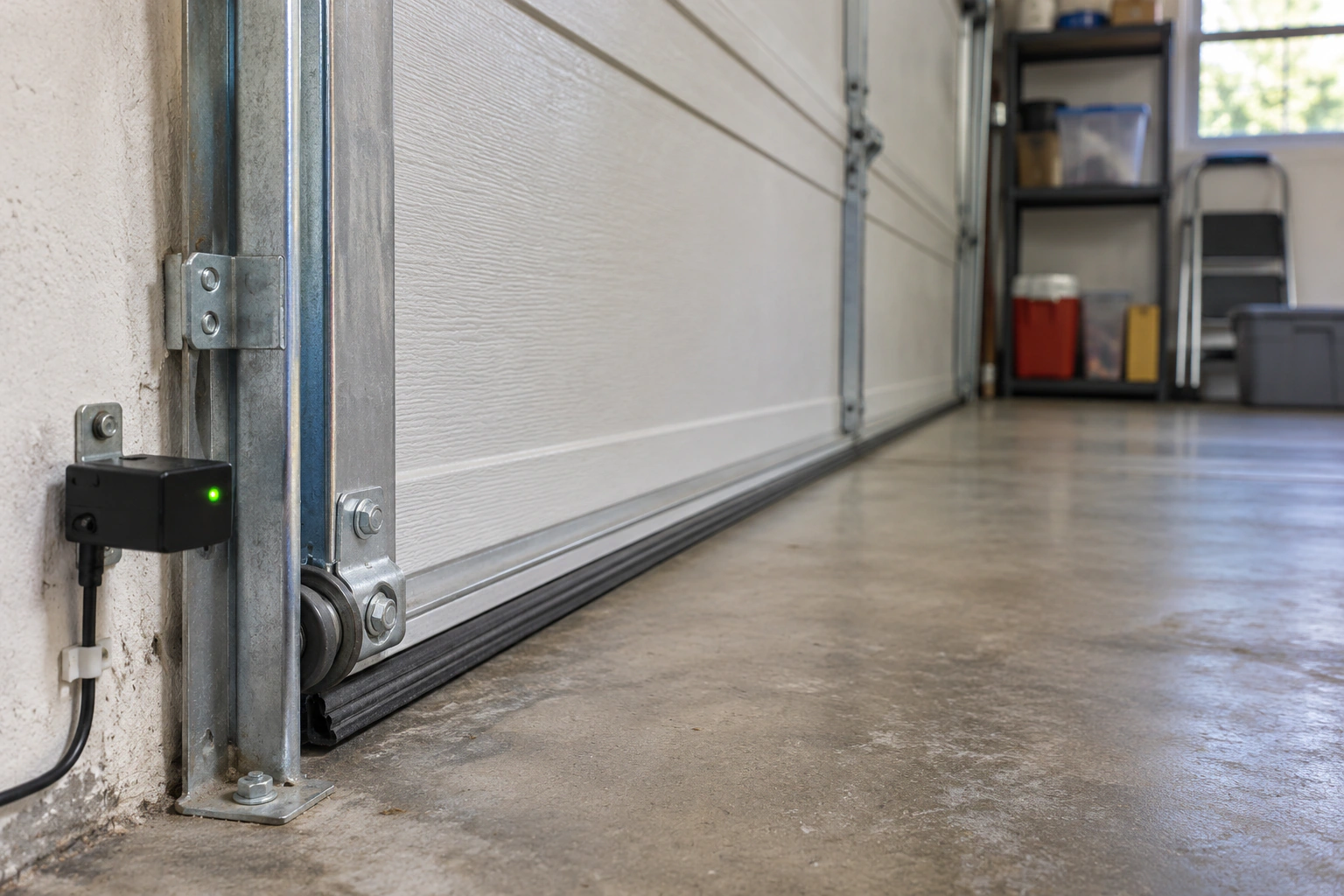
If you have noticed that the door only closes while a wall button is held, report that exact behavior. It can point toward a safety-sensor issue on applicable equipment, but the model and system still need to be considered. It should not become a way to keep using a door with an unresolved fault.
Keep the opener's brand and model available if you can read them without climbing. Different equipment can use different indicators, so a count of flashes has more meaning when it is connected to the correct product.
Do not solve resistance by adding force
Manufacturer guidance treats an obstruction, a binding door and control settings as distinct matters. Increasing force is not an appropriate way to compensate for a door that is sticking. Adjustment can affect the safety reversal function and should follow an assessment of the actual condition.
You can note an obvious object in the doorway without touching the mechanism. Avoid reaching into moving parts, bypassing a sensor or altering spring and cable hardware. If you are unsure whether the door is stable, leave it alone and explain the condition during the call.
The useful next step is to identify why normal closing is being interrupted. Buying sensors, an opener or another part before that assessment may leave you with equipment that does not address the cause.
Make the visit possible without moving the door
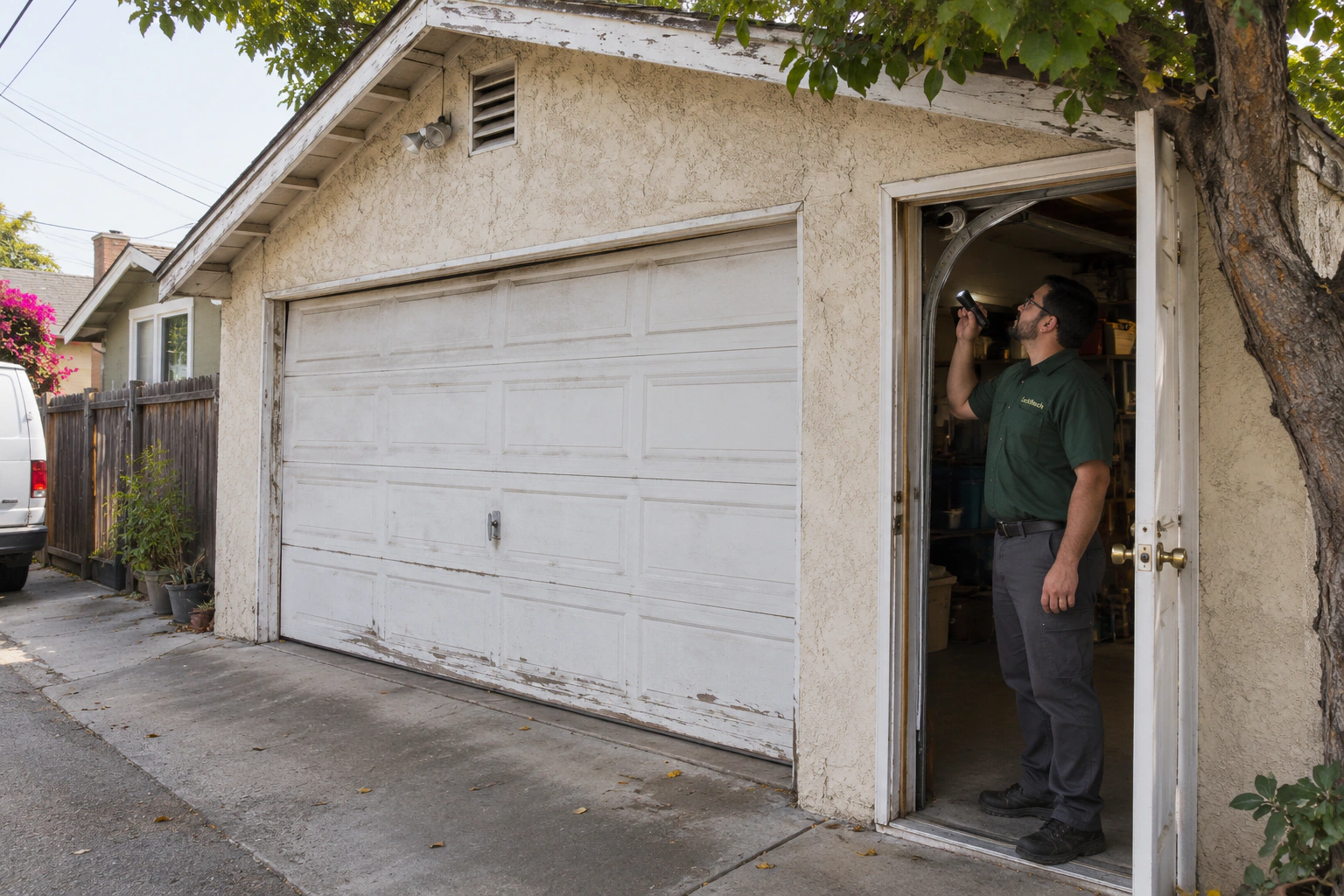
Explain how the garage can be reached and whether there is a separate access door. At a Bell property with more than one unit, identify which garage is affected and who has authority to approve work. A street number alone may not distinguish several doors.
If a vehicle is trapped inside, say so. If the door is open and the contents are exposed, explain that too. These details communicate the effect of the problem; they do not mean that you should try to lower or raise the door before it has been assessed.
Contact the owner or property manager where their approval is needed. Keep the appropriate person reachable so that a repair recommendation can be discussed without delay caused by missing authorization.
Ask what the proposed repair will address
The assessment should connect the observed symptom to the proposed work. Ask whether the issue involves a control, the opener, the door's movement or more than one component. Make sure you understand any part being recommended and the limits of the repair.
Discuss the scope and charges before work begins. If another fault is found, ask for an explanation before authorizing the addition. Afterward, have the agreed operation and any remaining concern explained to the people who use the garage.
For the broader service, visit garage door repair in Bell. When you call 323-271-4264, a clear description of the door's position and its last normal operation gives the conversation a better starting point than a guessed diagnosis.
Questions about the next step
Does a closing problem always mean the sensors are faulty?
No. Sensors are one possible cause, but the controls, equipment and mechanical condition need to be considered. Describe the behavior and model rather than treating one symptom as a confirmed diagnosis.
Should I reset the opener before calling?
Explain the existing symptoms first. Repeated resets or several adjustments can make the original behavior harder to describe. Follow the correct product guidance and avoid changing settings to overcome a sticking or visibly damaged door.
Local and practical reference: support.chamberlaingroup.com.